




Surviving a stroke is a life-altering event that often presents significant physical, emotional, and functional challenges. In the aftermath of a stroke, patients and their families are frequently faced with sudden changes in motor control, muscular strength, balance, and overall mobility. Navigating this new reality requires structured care, expert clinical support, and dedication. Post-Stroke Rehabilitation Physiotherapy serves as a vital foundation for individuals seeking to regain functional movement, rebuild their confidence, and reclaim their quality of life.
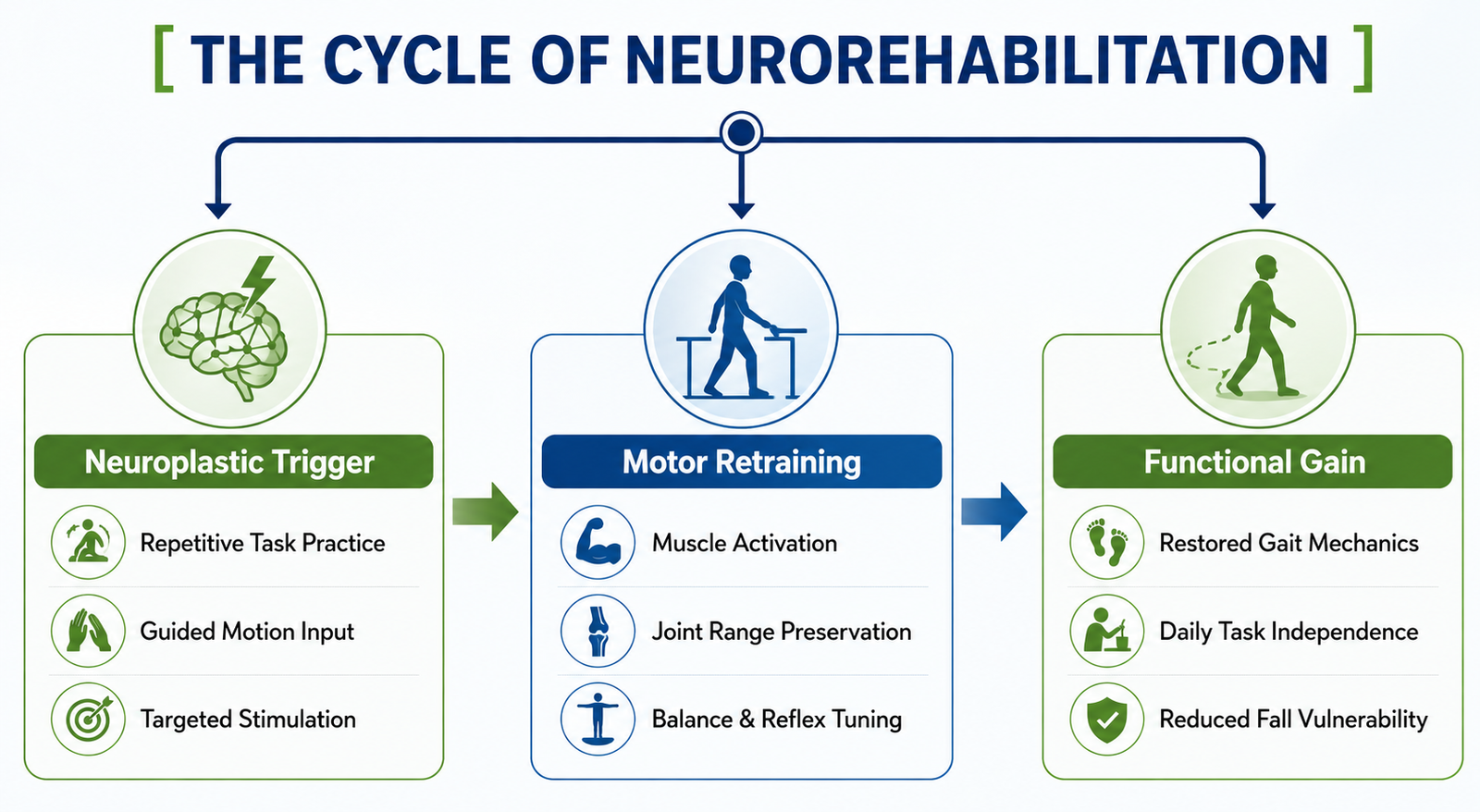
Under the professional guidance of Dr. Priyanka Arora, specialized Post-Stroke Rehabilitation Physiotherapy offers a tailored, evidence-informed pathway toward optimal physical recovery. By focusing on the brain’s natural capacity to adapt and rewire—a process known as neuroplasticity—guided rehabilitation helps survivors restore essential movement patterns and work toward meaningful independence.
Post-Stroke Rehabilitation Physiotherapy is a targeted clinical discipline designed to restore physical movement, muscular coordination, and functional capacity following a cerebrovascular event. When a stroke disrupts blood flow to specific regions of the brain, the neural pathways that control physical movement can become damaged or interrupted. This often manifests as weakness or paralysis on one side of the body (hemiparesis or hemiplegia), tightness, or balance loss.
Through focused Post-Stroke Rehabilitation Physiotherapy, Dr. Priyanka Arora works directly with patients to retrain the nervous system and musculoskeletal framework. By utilizing repetitive, goal-oriented movement strategies, Post-Stroke Rehabilitation Physiotherapy encourages healthy brain tissue to form new neural connections, essentially teaching the body how to move safely and efficiently once again.
The period following a stroke is a critical window for physical recovery. Early and consistent Post-Stroke Rehabilitation Physiotherapy plays a central role in mitigating long-term physical complications and maximizing physical potential. Without structured movement therapy, prolonged immobility can lead to secondary issues such as muscle atrophy, joint contractures, pressure sores, and cardiovascular decline.
Undergoing comprehensive Post-Stroke Rehabilitation Physiotherapy with Dr. Priyanka Arora ensures that joint flexibility is preserved, muscle tone is monitored, and functional movement is systematically reintroduced. Beyond physical benefits, Post-Stroke Rehabilitation Physiotherapy provides essential psychological encouragement, helping patients recognize tangible progress as they regain control over their bodies.
A stroke impacts every individual differently depending on the location and extent of the brain lesion. Receiving an accurate assessment through Post-Stroke Rehabilitation Physiotherapy helps address the specific mechanical and neurological deficits a patient experiences.
Recognizing these challenges allows Dr. Priyanka Arora to craft a structured plan for Post-Stroke Rehabilitation Physiotherapy that directly targets each patient’s unique functional limitations.
The primary objective of Post-Stroke Rehabilitation Physiotherapy is to transform functional limitations into achievable movement milestones. By breaking down complex movements into manageable steps, Dr. Priyanka Arora guides patients through progressive functional retraining.
During Post-Stroke Rehabilitation Physiotherapy, therapy focuses on re-establishing brain-to-muscle communication. Through continuous feedback, manual guidance, and repetitive exercise, Post-Stroke Rehabilitation Physiotherapy helps re-establish natural movement symmetry, preventing patients from overcompensating with their non-affected side.
A modern program for Post-Stroke Rehabilitation Physiotherapy incorporates multiple clinical modalities tailored to the patient’s stage of recovery. Dr. Priyanka Arora utilizes a combination of evidence-based interventions to foster physical progress:
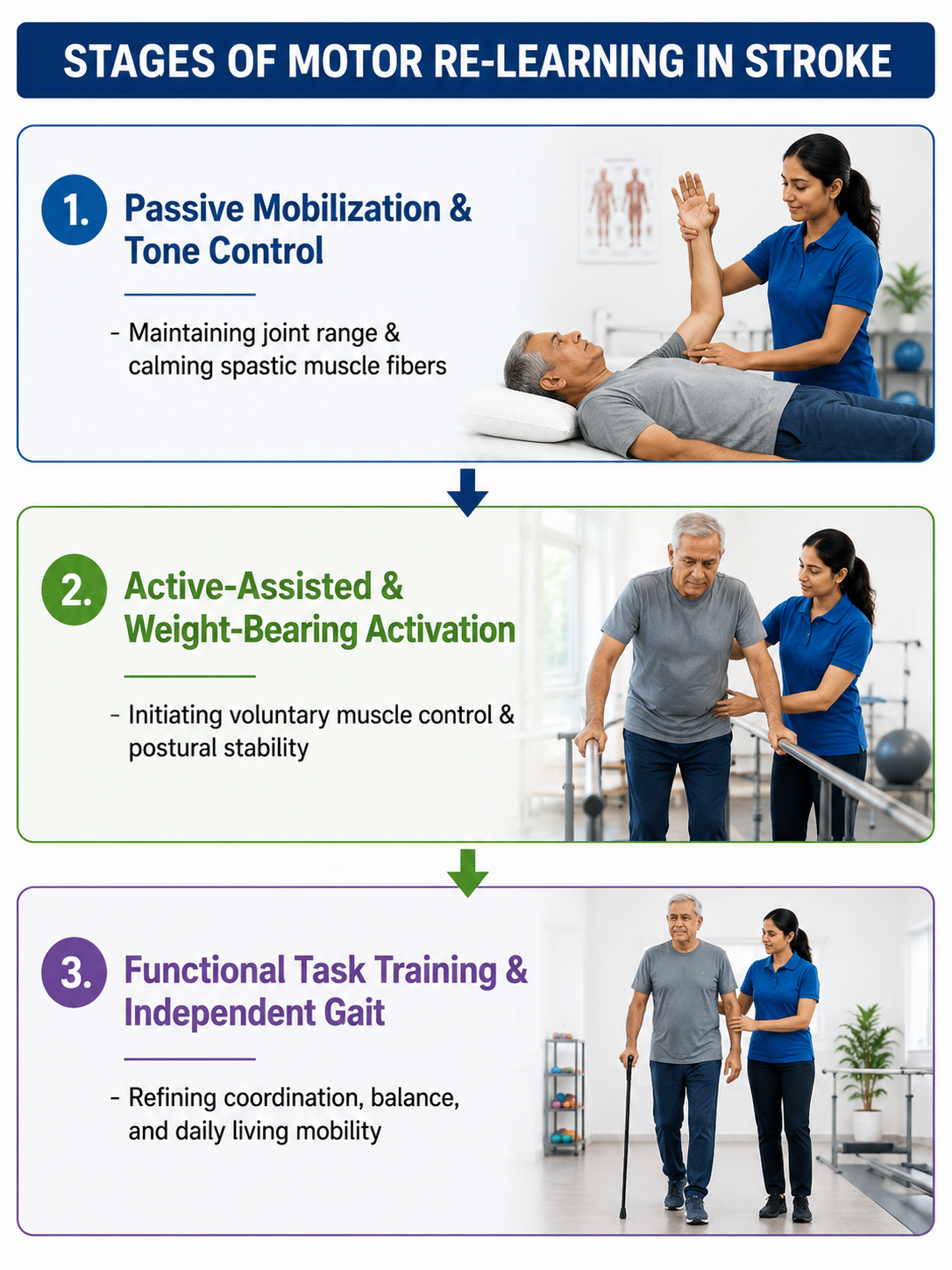
Initially, tight or paralyzed limbs require gentle movement to maintain joint health. Passive range-of-motion stretches reduce muscle stiffness, preserve soft tissue elasticity, and prevent painful joint contractures. As recovery progresses, active-assisted exercises encourage the patient to contribute to the movement.
In suitable candidates, Post-Stroke Rehabilitation Physiotherapy may utilize principles of CIMT. By gently restraining the stronger limb, the patient is encouraged to use the affected arm or leg, forcing the brain to reactivate motor pathways associated with the weakened side.
Sitting and standing balance are foundational for walking. Post-Stroke Rehabilitation Physiotherapy incorporates seated trunk control drills, weight-shifting exercises, and standing balance tasks to strengthen deep core stabilizers and reduce fall risks.
Relearning to walk safely is a major milestone in Post-Stroke Rehabilitation Physiotherapy. Therapists utilize parallel bars, harness systems, and visual cues to help patients practice proper heel-to-toe foot placement, weight transfer, and rhythmic stepping.
Rehabilitation extends beyond basic exercise to include functional daily movements. During Post-Stroke Rehabilitation Physiotherapy, patients practice sitting-to-standing transitions, reaching for objects, turning safely, and navigating steps.
Consistency is the cornerstone of successful Post-Stroke Rehabilitation Physiotherapy. Engaging in regular, structured therapy sessions yields wide-ranging benefits for physical health:
By committing to a regular schedule of Post-Stroke Rehabilitation Physiotherapy under the direction of Dr. Priyanka Arora, patients set a solid foundation for long-term health.
Stroke recovery is rarely a solo journey. Family members and caregivers play an essential role alongside professional Post-Stroke Rehabilitation Physiotherapy.
During clinical sessions, Dr. Priyanka Arora works closely with caregivers, providing clear guidance on how to assist with transfer techniques, home exercises, and mobility safety. When caregivers understand the principles of Post-Stroke Rehabilitation Physiotherapy, they can safely encourage daily practice at home without causing strain or over-fatiguing the patient. Creating a safe, supportive home environment reinforces the progress achieved during formal therapy sessions.
A common question among families is when to begin Post-Stroke Rehabilitation Physiotherapy. Clinical consensus indicates that physical rehabilitation should commence as early as medically stable—often within 24 to 48 hours following a stroke in an acute hospital setting.
Once a patient transitions home or to an outpatient clinic, formal Post-Stroke Rehabilitation Physiotherapy should continue without long interruptions. Initiating structured Post-Stroke Rehabilitation Physiotherapy with Dr. Priyanka Arora early takes full advantage of the brain’s peak window of neuroplasticity, though meaningful functional gains can still be made months or even years post-stroke with dedicated effort.
Entering a program for Post-Stroke Rehabilitation Physiotherapy begins with a thorough clinical assessment. When you consult with Dr. Priyanka Arora, the initial evaluation includes:
Throughout your journey with Post-Stroke Rehabilitation Physiotherapy, treatment plans are continuously updated to match your evolving physical capabilities, ensuring that therapy remains challenging yet fully manageable.
The duration of Post-Stroke Rehabilitation Physiotherapy varies widely based on stroke severity, overall health, and individual consistency. While the most rapid functional gains often occur in the first 3 to 6 months, continuous improvements in balance, strength, and mobility can continue for years through ongoing exercise.
Yes. While early intervention is ideal, neuroplasticity remains active throughout life. Dedicated Post-Stroke Rehabilitation Physiotherapy can help chronic stroke survivors improve their functional mobility, manage spasticity, and enhance daily independence long after the initial event.
Physiotherapy does not offer a guaranteed “cure” for paralysis. However, Post-Stroke Rehabilitation Physiotherapy helps maximize potential recovery by stimulating remaining neural pathways, strengthening supporting muscles, and teaching adaptive strategies to maintain safe, functional movement.
Home exercises prescribed during Post-Stroke Rehabilitation Physiotherapy should generally be performed daily in short, manageable sessions, as guided by Dr. Priyanka Arora. Frequent, gentle practice is far more effective for neural retraining than infrequent, exhausting workouts.
Recovering from a stroke is a gradual journey that requires patience, dedication, and expert clinical guidance. While the physical challenges following a stroke can feel overwhelming, Post-Stroke Rehabilitation Physiotherapy offers a proven, structured pathway toward rebuilding motor control, restoring balance, and regaining meaningful independence.
By leveraging neuroplasticity through targeted movement retraining, manual therapy, and task-specific exercises, Dr. Priyanka Arora provides compassionate, patient-centered care tailored to every stage of recovery. Empowering both survivors and their caregivers with functional tools ensures that progress continues beyond the clinic walls. Don’t let physical limitations define your future—schedule a comprehensive consultation with Dr. Priyanka Arora today to begin your personalized journey toward restored movement and long-term health.